



Community
Turning Assumptions into Questions: NIC’s Cardinal Reads Luncheon Encourages Conversations Across Differences

In a time when political disagreements can feel more like dividing lines than opportunities for conversation, members of the North Idaho College community gathered on Monday to consider a different approach: curiosity.
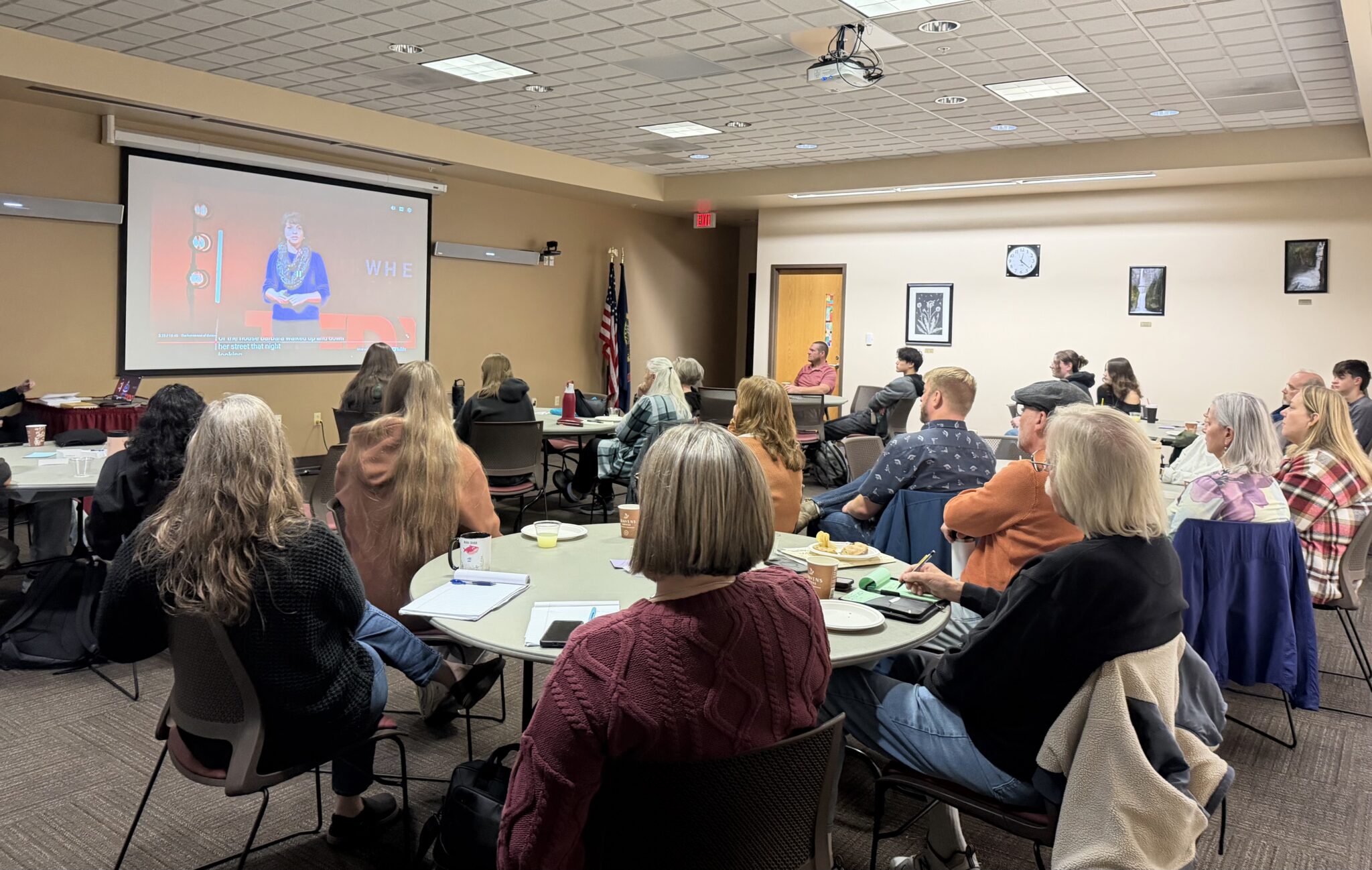
Hosted through NIC’s Cardinal Reads program, the roundtable luncheon brought together students, faculty, staff and community members to explore the ideas presented in Mónica Guzmán’s “I Never Thought of It That Way: How to Have Fearlessly Curious Conversations in Dangerously Divided Times.”
The discussion centered on the question: What might change if people approached disagreement with a genuine desire to understand rather than persuade?
“We can all cultivate and practice the habit of curiosity.”
Professor and chair of NIC’s English and Humanities division Erin Davis opened the luncheon by examining some of the forces contributing to political polarization, including social media algorithms, confirmation bias and the tendency to surround ourselves with people who share our beliefs.
“There’s a lot of money to be made off of keeping us feeling like we’re divided,” Davis said.
She explained that social media platforms often prioritize emotionally charged content that reinforces existing beliefs, making it increasingly difficult to understand perspectives outside our own.
While political division may be amplified by technology, Davis emphasized that curiosity is a skill people can intentionally develop.
“We can all cultivate and practice the habit of curiosity,” she said.
Following an introduction to Guzmán’s work and a screening of her TED Talk, attendees participated in roundtable discussions about how curiosity might help bridge differences in their own lives and communities.
Professor of Child Development Kathleen Miller Green reflected on the importance of entering conversations without predetermined conclusions.
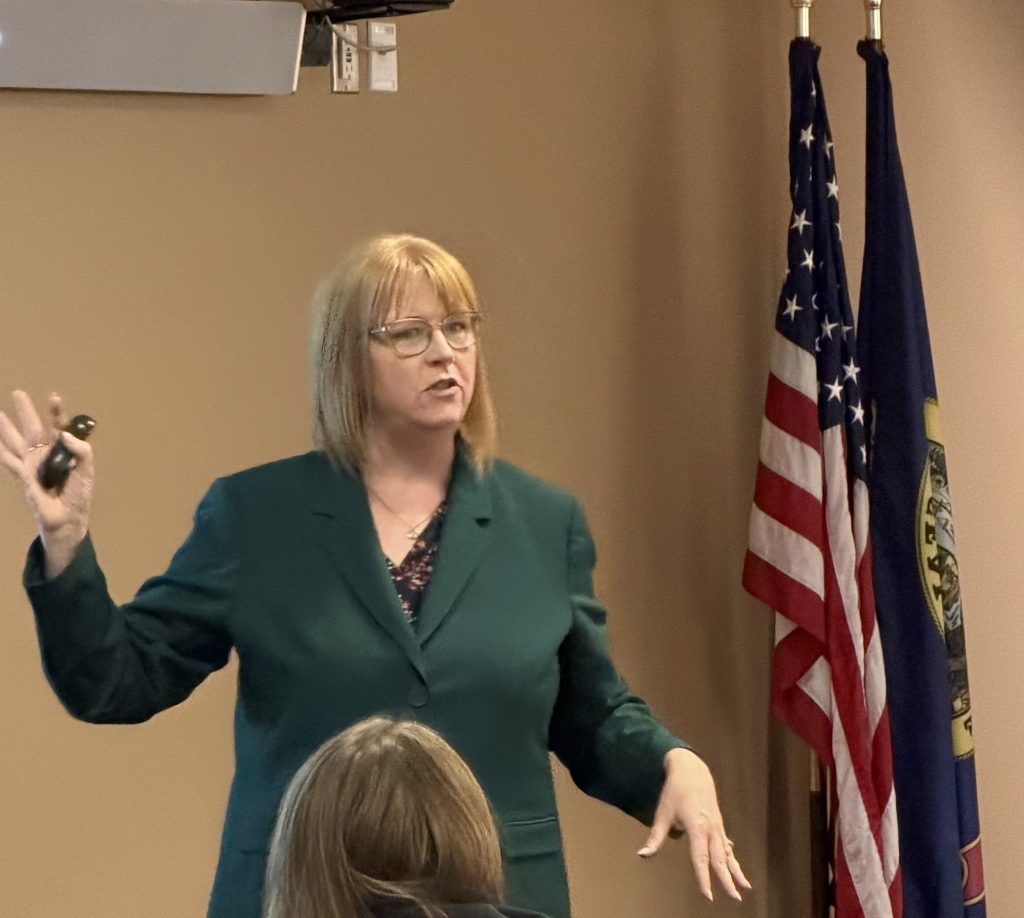
Miller Green compared genuine listening to the work of Sherlock Holmes, explaining that approaching conversations with curiosity allows people to gather information and better understand one another rather than simply searching for confirmation of what they already believe.
Assistant professor of Child Development Alison Dundas similarly encouraged attendees to embrace uncomfortable conversations and engage with perspectives that may be missing from their everyday lives.
Drawing from Guzmán’s book, Dundas shared an observation which underscored a recurring theme throughout the luncheon.
“Whoever is unrepresented in your life will be overrepresented in your imagination,” she said.
The possibility that people with opposing perspectives may share more common ground than they initially recognize was also explored. During the discussion one student observed that people often hold similar values but differ in how they express them.
The way that these differences in expression relate to our relationships and greater sense of community is something administrative support specialist at NIC and author of “How to Understand Your MAGA Friends and Family” Susan Lehman highlighted.
“Curiosity is the thing that makes other people know that you care about them.”
Lehman shared an excerpt from her book reflecting on a time when people could disagree politically while still enjoying holidays, community gatherings and everyday conversations together.
“I think we want all that back. I think we miss each other terribly,” she said.
Lehman described her book as a bridge to understanding the information and experiences that shape political perspectives, emphasizing that the goal is not necessarily to change someone’s mind, but to understand how they arrived at their conclusions.
Despite the differences that can separate people, the discussion repeatedly returned to the possibility of shared values and common ground.
For community member Jill Kalberg, the importance of curiosity extended beyond just political conversations.
“Curiosity is the thing that makes other people know that you care about them,” Kalberg said.
As the luncheon came to a close, Davis encouraged attendees to carry the conversation beyond the room and into their everyday interactions.
“My hope is everybody will leave here a little bit more curious about other people,” she said, encouraging participants to remain mindful of the gap between assumption and curiosity.